Campaigning during municipal elections in Grimsby has traditionally been a very grassroots affair: candidates knocking on doors, delivering flyers and door hangers, sending mail-outs and competing for space on lawns and prime viewing locations with election signs.
However, a new form of political outreach has now entered the local mayoral race, one that is much less personal than a conversation at the door and instead reaches right into residents’ personal phones.
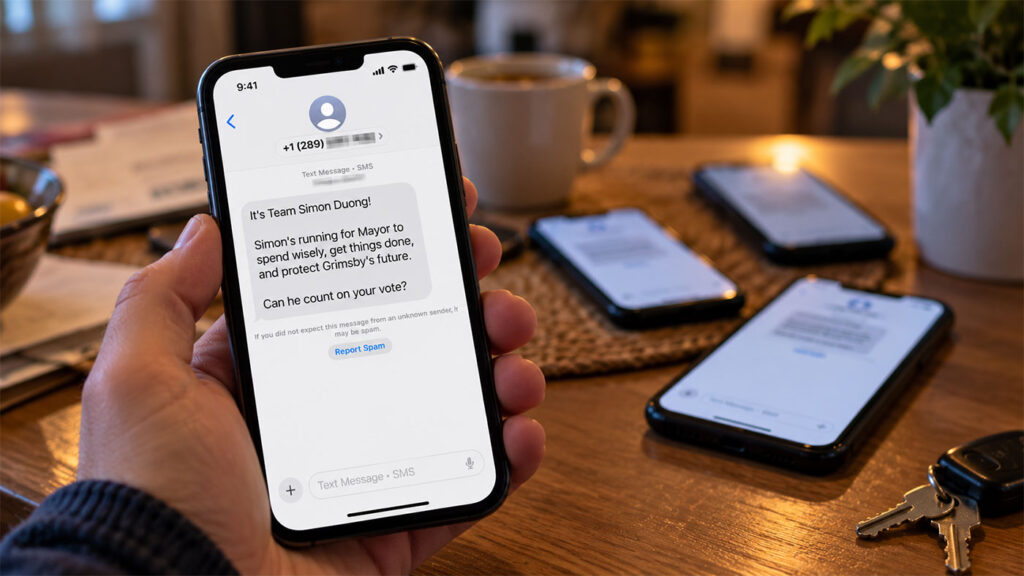
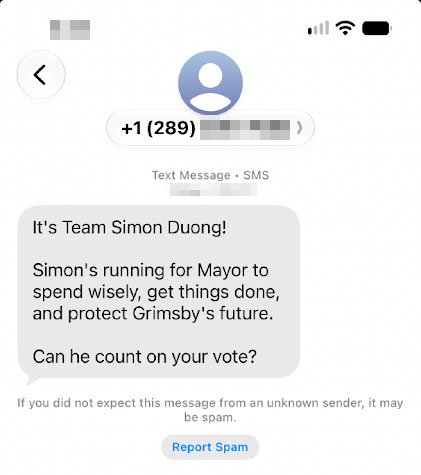
GCFRG was provided with a text received by a Grimsby resident that identifies itself as coming from Team Simon Duong,” along with second-hand reports of similar messages being received by other residents.
Duong was asked Tuesday afternoon for additional details about the texting campaign. He confirmed that text messaging is now part of his campaign’s voter outreach, alongside door knocking and online campaigning.
“My campaign is actively reaching out to voters in a variety of different ways, including doorknocking, online, and by text message.”
He also confirmed that a service provider supplied the campaign with the list being used for the texting.
“We are using a service provider, and they have provided the list.”
Duong did not identify the provider, explain where the telephone numbers on the provider-supplied list originated or say how many Grimsby residents are being contacted.
Political Spam?
Political campaign texts can be legal, but that does not necessarily make them welcome with open arms by recipients. Unlike a campaign sign or flyer, a text arrives directly on a personal device alongside messages from friends, family and businesses.
Duong stated that anyone who does not want further messages can simply say so:
“If people don’t want to receive further messages they can say so in their response and we won’t message them anymore.”
The original “Team Simon Duong” message, however, contains no instructions telling the recipient that they can opt out.
Duong was also asked whether the campaign had received any opt-out requests or complaints; however, he did not address that part of the question.
More Than Just a Campaign Message
There is another important difference between a text like this and a lawn sign or campaign flyer, in that the text asks for something in return.
Can he count on your vote?
Duong confirmed that the campaign intends to use the answers.
“We are asking directly if we can count on people’s support and yes we are planning to use that information to remind our supporters to vote.”
A response to that question can therefore do more than simply reply to the campaign text. It can provide information about that recipient’s political support that can subsequently be used for political campaigning.
Canada’s federal, provincial and territorial Privacy Commissioners have described political views and voting intentions as sensitive personal information when discussing the collection and use of information about voters.
That broader privacy guidance does not, by itself, establish what privacy laws apply to a Grimsby municipal election campaign. But it does illustrate why asking someone how they intend to vote is different from simply sending them a campaign advertisement.
Duong’s response explains how the campaign intends to use supportive responses, but does not address whether or how those responses are recorded or retained.
A Familiar Message
The Duong text also bears similarities to another political text recently reported in Niagara Falls. In a public Facebook post, a recipient shared a message identifying itself as being sent on behalf of Mayor Jim Diodati.
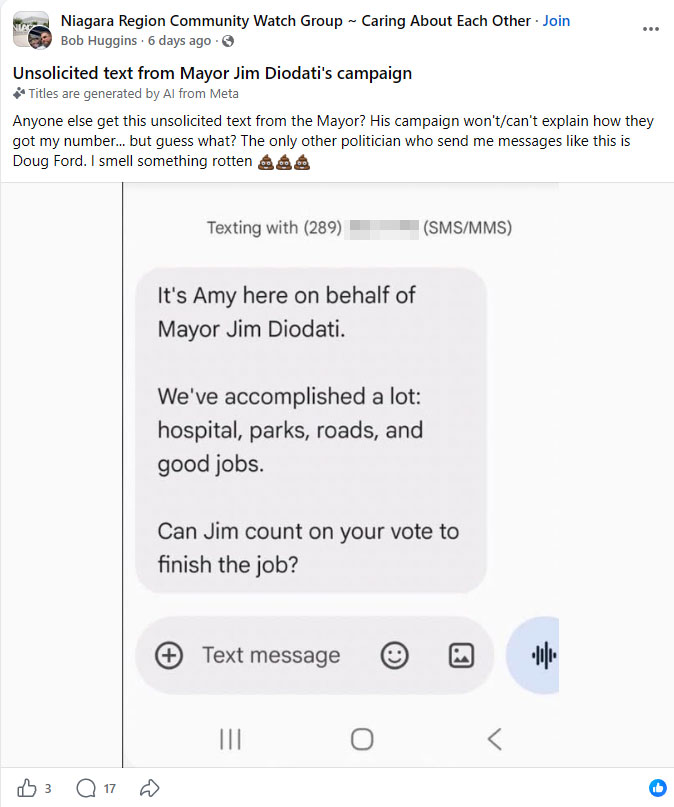
The message reads:
It’s Amy here on behalf of Mayor Jim Diodati.
We’ve accomplished a lot: hospital, parks, roads, and good jobs.
Can Jim count on your vote to finish the job?
Duong’s message follows a similar structure:
It’s Team Simon Duong!
Simon’s running for Mayor to spend wisely, get things done, and protect Grimsby’s future.
Can he count on your vote?
Both identify the campaign, deliver a short political pitch and finish by asking the recipient whether the candidate can count on their vote.
A Changing Campaign Landscape
Duong did not identify the service provider, say how many Grimsby residents are being contacted, or explain where the telephone numbers on the provider-supplied list originated.
Where those numbers came from may be particularly important to residents receiving political messages on their personal phones. But there is also a broader question raised by this new form of campaigning:
How do Grimsby voters feel about it?
Door knocking, campaign literature and lawn signs are not going out of style anytime soon. But something different has now joined them, with political campaigning no longer stopping at the doorstep but reaching directly into residents’ personal phones.
Once there, these messages can ask whether a candidate can count on someone’s vote and generate information about political support that can subsequently be used for political campaigning.
The campaign landscape in Grimsby has changed, and whether voters welcome that change is another question.
What do you think about political campaign texts? And if you have received a similar message from other Grimsby candidates, let us know in the comments on our Facebook post.